
Cosmetic dentistry
Dental Veneers in Turkey
A thin covering for the front of a tooth that changes its shade, shape or edge.
Suitability depends on an individual clinical assessment — nothing is decided before you are examined.

Ask for a call back
Leave your name and number — the clinic calls you back.
Thank you. The clinic will call you.
Your number has reached the team in Alanya — your reference is . If it is easier, you can write on WhatsApp instead: Open WhatsApp
Your number could not be sent
Nothing was received, so please try again — your answers are still in the form.
About the treatment
A category, not a single material
A veneer is a thin layer of porcelain or composite bonded to the front surface of a tooth to change how it looks. Veneers may be considered for discolouration, chips, worn edges or small gaps on otherwise sound teeth; your dentist will assess suitability and which type fits your case.

A veneer covers the face of a tooth; a crown encloses all of it.
A veneer covers the face of a tooth rather than the whole of it. That is the main difference from a crown, which encloses the tooth on every side. Because a veneer changes only what you see — colour, outline, length and the edge line — the back of the tooth and much of its structure are usually left as they are.
The word covers more than one option. Porcelain (ceramic) veneers are made outside the mouth to an agreed design and then bonded in place; they resist staining and reflect light much like enamel. Composite veneers are built up directly on the tooth in tooth-coloured resin, usually with little or no preparation, and are easier to adjust or repair, though they tend to stain and wear sooner.
Within porcelain there are further choices. Laminates are very thin veneers that need minimal preparation, and e-max veneers are made from a lithium-disilicate glass-ceramic chosen for its translucency; both have their own pages. Which option suits you depends on how much change is wanted, how dark the underlying tooth is, how you bite, and how much sound enamel there is to bond to.
Who may consider it
Who may consider dental veneers
Veneers are usually discussed when the concern is how a basically healthy tooth looks. An examination decides whether they are appropriate.
Treatment suitability depends on an individual clinical assessment. Your dentist will discuss the options, risks and expected outcomes with you.
-
01
Discolouration whitening cannot reach
Some internal staining, or a single darker tooth, may not lighten enough with whitening alone.
-
02
Chipped or worn front edges
A veneer can rebuild an uneven or shortened edge line across one or several teeth.
-
03
Small gaps or uneven shapes
Adjusting tooth width and outline can reduce small spaces, within limits set by the bite and gums.
-
04
Mildly irregular front teeth
Veneers can change how slightly rotated teeth appear, although orthodontics may be more appropriate when teeth are clearly out of line.

Benefits and considerations
What it can offer, and what to weigh up
Balanced information, because the right decision depends on both.
What it can offer
- Shade and shape togetherColour, length and outline can be changed in one treatment, which whitening alone cannot do.
- Often more conservative than a crownOnly the front surface is covered, so more natural tooth is usually kept.
- A choice of materialsComposite and porcelain differ in preparation, appearance, repairability and upkeep, so the choice can follow your priorities.
- Stain resistance with porcelainCeramic resists staining from coffee, tea and wine better than natural enamel or composite.
What to consider
- Often irreversibleWhere enamel is removed to make space, the tooth will need a covering of some kind from then on.
- Not suitable for every mouthActive gum disease, decay, heavy grinding or little remaining enamel may point to a different treatment.
- Maintenance and replacementVeneers can chip, come loose or stain at the margins, and may need repair or replacement over time.
- Whitening afterwards has no effectVeneers keep the shade they were made in, so any whitening of other teeth is planned first.


Step by step
How the process works
The steps differ between composite and porcelain veneers. This outline follows a typical porcelain case, which usually involves more than one appointment.

-
Step 01
Examination and X-rays
Teeth, gums, bite and existing fillings are assessed, and any decay or gum disease is treated first.
-
Step 02
Planning shape and shade
The proposed outline, length and shade are discussed with you, often with the help of photographs.
-
Step 03
Preparation
Where needed, a thin layer of enamel is removed from the front surface under local anaesthetic, and impressions are taken.
-
Step 04
Temporary protection
Prepared teeth may be covered with temporary veneers while the final ones are made.
-
Step 05
Try-in and bonding
Fit, colour and shape are checked in the mouth before each veneer is bonded.
-
Step 06
Bite check and review
The bite is adjusted, edges are polished, and aftercare is explained, including whether a night guard is advisable.
Side by side
Porcelain or composite veneers
Both are veneers, but they are made and maintained differently. Your dentist will explain which suits your teeth and priorities.
| Porcelain veneers | Composite veneers | |
|---|---|---|
| How they are made | Made outside the mouth, then bonded | Built up directly on the tooth |
| Tooth preparation | Usually some; minimal in thin designs | Often little or none |
| Appearance | Enamel-like translucency and lustre | Natural-looking, but may dull with time |
| Staining | Resists stain well | Can pick up surface stain |
| If damaged | Usually replaced | Often repairable in the chair |
| Appointments | Usually more than one | Often fewer |

Real results
Cases the clinic has shared: porcelain veneers
Each image is the clinic’s own before-and-after composite, shown exactly as supplied. Results vary between patients and depend on an individual clinical assessment.
See all before and after casesMore results on Instagram
MarieNetherlands · Porcelain veneers 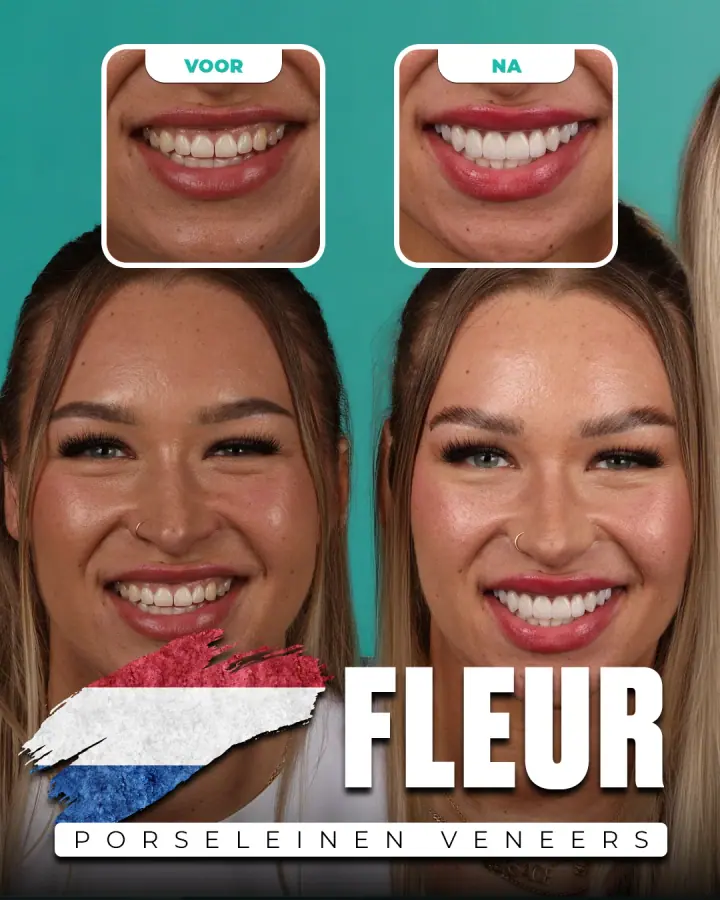
FleurNetherlands · Porcelain veneers 
JuliaNetherlands · Porcelain veneers 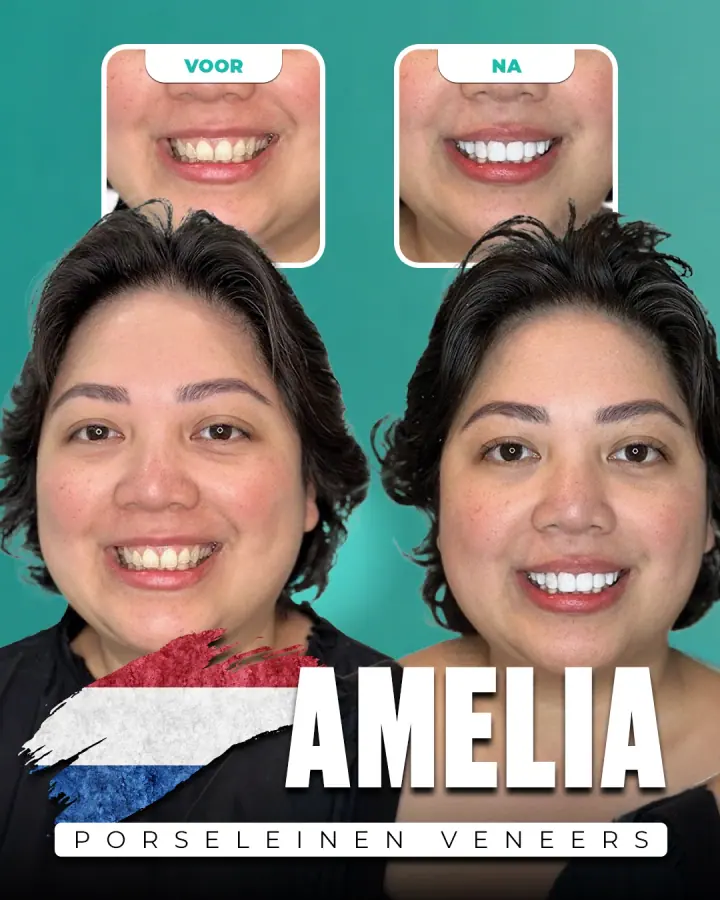
AmeliaNetherlands · Porcelain veneers


Treatment and Alanya
Veneers planned to suit your stay in Alanya
Porcelain veneers usually need more than one appointment, so the sequence is planned with your travel dates in mind once you have been examined. Your dentist will explain whether your case suits a single stay or needs a follow-up visit.
How a dental holiday worksWhy Dental Art
What you can expect from us
Dentists in Alanya: Esra Namlı and Oğuz Ulutaş.
-
A plan before you book travel
Options, the likely number of appointments and what still depends on an examination — before flights are booked.
-
Five languages
The Dental Art group works in Dutch, English, German, Russian and Turkish, with practices in Alanya, Glanerbrug and Venlo.
-
One number throughout
WhatsApp +31 6 1508 6008 reaches the clinic before, during and after your visit.
-
Stay and transfers on request
Hotel stays and transfers between hotel and clinic can be arranged; what applies to you is confirmed in advance.
Ready when you are
Considering dental veneers? Start with a conversation.
Share what you would like to change and any recent X-rays or photographs. You will hear what is realistic, and what an examination would need to confirm.
Call +31 6 1508 6008Questions
Questions about dental veneers
If yours is not here, ask it directly. There is no obligation in asking.
Ask on WhatsAppWhat is the difference between veneers and laminates?
Laminates are a kind of porcelain veneer, made particularly thin so that minimal preparation of the tooth is needed. “Veneers” is the broader term, which also covers thicker porcelain veneers and composite veneers. A laminate keeps more enamel but can hide less; a conventional veneer allows larger changes in colour and shape. Your dentist will suggest which is realistic for your teeth.
Do my teeth need to be filed down?
Often a thin layer of enamel is removed from the front surface so the veneer does not look bulky, but the amount varies. Composite veneers and very thin laminates may need little or none. Your dentist decides tooth by tooth from the planned shape, and you will know what is proposed before any preparation begins.
Porcelain or composite — which is right for me?
It depends on what you want to change and how you weigh the trade-offs. Porcelain resists staining and closely resembles enamel, but it usually involves irreversible preparation and more appointments. Composite is less invasive and easier to repair, but it stains and wears more readily. Your bite, habits and the condition of your teeth all shape the recommendation.
How long do veneers last?
There is no single honest figure. Lifespan depends on the material, how well the teeth are looked after, whether you grind or clench, and accidents. Veneers can chip, come loose or show wear at the edges, and may eventually need repair or replacement. Regular check-ups help any problems to be noticed early.
Can veneers be whitened?
No. Porcelain does not respond to whitening gel, and composite does not lighten the way natural enamel does. If you would like your other teeth lighter, whitening is usually done first and the veneers are then matched to the new shade. That is why the shade is chosen carefully at the planning stage.
Can veneers fix crooked teeth?
Veneers can change how slightly irregular teeth appear, but they do not move teeth. Where teeth are clearly crowded or rotated, or the bite is affected, creating a straight look with veneers can mean removing a lot of tooth structure. Orthodontic treatment, alone or before veneers, may then be more appropriate, and your dentist will explain the options.
What if I grind my teeth?
Grinding and clenching put strong forces on veneers and are a common reason for chips and loosening. They do not always rule veneers out, but they affect the material chosen, the design of the edges and the aftercare. Your dentist may recommend a night guard, or suggest a different approach if the forces are heavy.
Related treatments
Often considered alongside


