
Cosmetic dentistry
Smile Design in Turkey
Deciding what your front teeth should look like, and how to get there, before anything is changed.
Suitability depends on an individual clinical assessment — nothing is decided before you are examined.

Ask for a call back
Leave your name and number — the clinic calls you back.
Thank you. The clinic will call you.
Your number has reached the team in Alanya — your reference is . If it is easier, you can write on WhatsApp instead: Open WhatsApp
Your number could not be sent
Nothing was received, so please try again — your answers are still in the form.
About the treatment
The plan that comes before the work
Smile design is a planning process rather than a treatment on its own. Your teeth, gums, lips and facial proportions are considered together to agree a plan for shape, shade and treatment order; your dentist will assess what is clinically suitable before recommending anything.

Changing your mind about a plan is easy; changing a tooth that has already been prepared is not.
Smile design looks at how your teeth relate to each other and to your face. Tooth length and width, the line of the biting edges, the centre line, how much tooth shows as you speak and smile, and how the gums frame each tooth are all considered together. The aim is a plan that suits your features rather than an average template.
The outcome is a plan: which teeth might be treated, what might be done to each, and in what order. That could involve whitening, composite bonding, veneers, crowns, gum treatment, orthodontics or a combination — and sometimes it involves less than you expected. Smile design does not start from the assumption that veneers are the answer.
Planning comes first because many cosmetic treatments are difficult or impossible to reverse. Health is part of the plan too: gum disease, decay or bite problems are normally addressed before any aesthetic work. Shade is decided with the whole case in mind, so that natural teeth, whitening and new restorations sit together rather than being matched one at a time.
Who may consider it
Who may consider smile design
A planning stage is most useful when more than one tooth or treatment is involved. Taking part does not commit you to treatment.
Treatment suitability depends on an individual clinical assessment. Your dentist will discuss the options, risks and expected outcomes with you.
-
01
Several front teeth are involved
Teeth are seen as a group, so planning them together helps them look coherent.
-
02
You are unsure what is possible
The process can clarify which concerns are realistic to address and which approaches are more conservative.
-
03
Your case combines treatments
Whitening, bonding, veneers or orthodontics need to be sequenced so that shade and shape work together.
-
04
Earlier work did not look right
Looking at proportion and gum line as a whole can help explain why, before anything is redone.

Benefits and considerations
What it can offer, and what to weigh up
Balanced information, because the right decision depends on both.
What it can offer
- Clarity before commitmentYou can discuss and adjust the proposal before any irreversible step is taken.
- The whole smile consideredEdges, centre line, proportion and gum line are looked at together, not tooth by tooth.
- Conservative options includedThe plan can include less invasive choices such as whitening, bonding or orthodontics.
- A clear treatment orderHealth first, then shade, then restorations, so later steps are not undone by earlier ones.
What to consider
- A plan, not a resultThe design describes an intended outcome; the treatment carried out, and how your teeth and gums respond, determine what is achieved.
- Limited by biologyGum levels, bite, tooth position and remaining enamel set real limits on what can change.
- Examination is essentialPhotographs can start a conversation, but a plan cannot be finalised without an in-person examination.
- Extra stages may be neededAddressing gum health or alignment first can add steps before cosmetic work begins.


Step by step
How the planning works
Smile design ends with an agreed plan. Treatment follows only if you choose to go ahead.

-
Step 01
Conversation
You explain what you would like to change and what matters most to you, such as a natural look or keeping enamel.
-
Step 02
Examination
Teeth, gums, bite and existing restorations are assessed, with X-rays where needed.
-
Step 03
Records
Photographs of your face and smile, and impressions where appropriate, tie the plan to your own features.
-
Step 04
Proposal
Your dentist sets out options for shape, proportion and shade, the treatments that could achieve them, and their limits.
-
Step 05
Discussion and adjustment
You ask questions and request changes; nothing is prepared until you are comfortable with the plan.
-
Step 06
Agreed sequence
Treatments are put in order, with health needs first, and scheduled around your circumstances.
Worth knowing
What a smile design looks at
These are some of the features considered together. Not every plan changes all of them.
-
01
Proportion
The width and length of each front tooth relative to its neighbours and to your face.
-
02
Edge line and centre line
How the biting edges follow your lower lip when you smile, and where the midline sits.
-
03
Gum line
How evenly the gums frame the teeth, and whether gum health or contour needs attention.
-
04
Shade and surface
A shade and translucency that suit your complexion and any natural teeth that remain untreated.
-
05
Function
How the teeth meet when you bite and chew, so the design works as well as it looks.

Real results
Cases the clinic has shared: porcelain veneers
Each image is the clinic’s own before-and-after composite, shown exactly as supplied. Results vary between patients and depend on an individual clinical assessment.
See all before and after casesMore results on Instagram
MarieNetherlands · Porcelain veneers 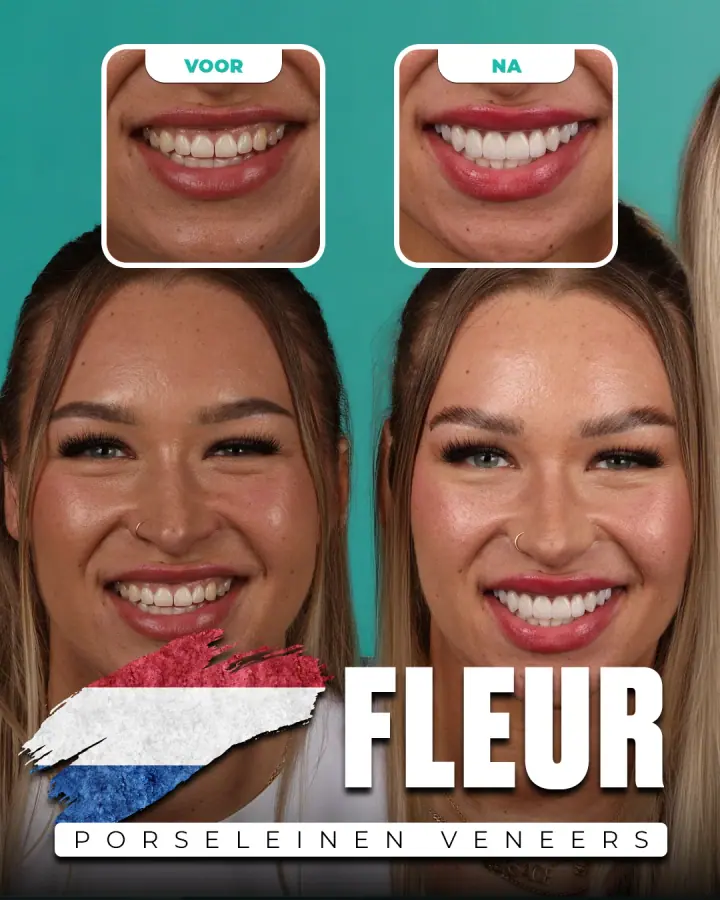
FleurNetherlands · Porcelain veneers 
JuliaNetherlands · Porcelain veneers 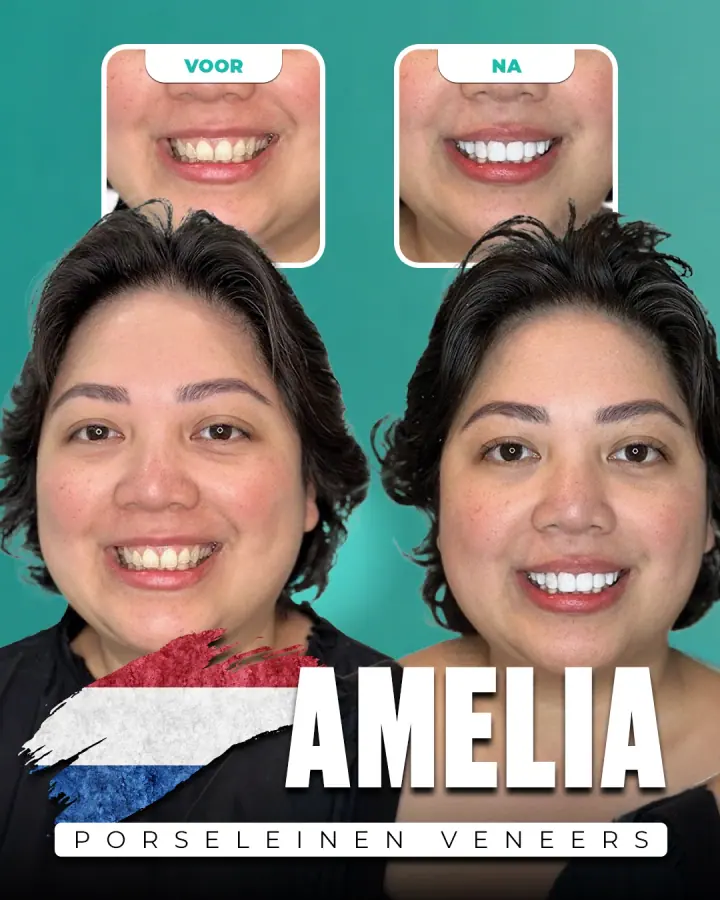
AmeliaNetherlands · Porcelain veneers


Treatment and Alanya
Planning first, before treatment on the Alanya coast
Photographs and your dental history can be discussed before you travel, but the plan is only confirmed after an examination in Alanya. Your dentist will then explain which parts suit your stay and whether any stage is better done later.
How a dental holiday worksWhy Dental Art
What you can expect from us
Dentists in Alanya: Esra Namlı and Oğuz Ulutaş.
-
A plan before you book travel
Options, the likely number of appointments and what still depends on an examination — before flights are booked.
-
Five languages
The Dental Art group works in Dutch, English, German, Russian and Turkish, with practices in Alanya, Glanerbrug and Venlo.
-
One number throughout
WhatsApp +31 6 1508 6008 reaches the clinic before, during and after your visit.
-
Stay and transfers on request
Hotel stays and transfers between hotel and clinic can be arranged; what applies to you is confirmed in advance.
Ready when you are
Considering smile design? Start with a conversation.
Share what you would like to change and any recent X-rays or photographs. You will hear what is realistic, and what an examination would need to confirm.
Call +31 6 1508 6008Questions
Questions about smile design
If yours is not here, ask it directly. There is no obligation in asking.
Ask on WhatsAppIs smile design a treatment?
No. It is the planning stage that decides whether, and how, your teeth might be treated. The work that changes your smile is whatever the plan recommends, such as whitening, bonding, veneers, crowns, gum treatment or orthodontics. Some people find the plan involves less treatment than they had assumed, or that health needs have to come first.
Does smile design mean I will need veneers?
Not necessarily. Veneers are one possible outcome, but the plan may recommend whitening, composite bonding, orthodontics or a combination instead. Where a more conservative option can address your concern, it should be part of the discussion. Your dentist will explain the advantages and limits of each option so you can make an informed choice.
Can the planning start before I travel?
Partly. Photographs of your smile and information about your dental history can help your dentist give an initial view on whether your goals seem realistic. The plan itself cannot be confirmed until you have been examined in person, because gum health, bite, enamel and existing restorations cannot be fully judged from photographs.
Can I see the proposed result beforehand?
Your dentist will explain the proposed changes using your photographs and the planned shape and shade. In some cases a temporary trial of the shape may be possible so you can judge it in your own smile; whether this is appropriate depends on the treatment being planned. Any preview is a guide rather than an exact representation of the outcome.
What if I do not like the proposal?
Then it can be discussed and changed. The reason for planning first is that adjustments are easy while the design is still a plan. Taking part in smile design does not commit you to treatment, and nothing should be prepared until you understand and agree with what is proposed.
How is the shade chosen?
Shade is considered for the whole smile rather than tooth by tooth. Your dentist looks at your natural teeth, your complexion and what you hope to achieve, and discusses how light or natural the result should look. If whitening is part of the plan, it usually comes before any restorations are made so they can be matched.
Related treatments
Often considered alongside


